Biochar: A promising solution in the fight against climate change
Biochar, a stable carbon-rich material produced through the pyrolysis or gasification of biomass, has emerged as a valuable tool in the battle against climate change. Recognized by The Intergovernmental Panel on Climate Change (IPCC) for its long-term carbon sequestration potential and multiple co-benefits, biochar offers a sustainable solution to mitigate greenhouse gas emissions while improving soil health.
What is biochar?
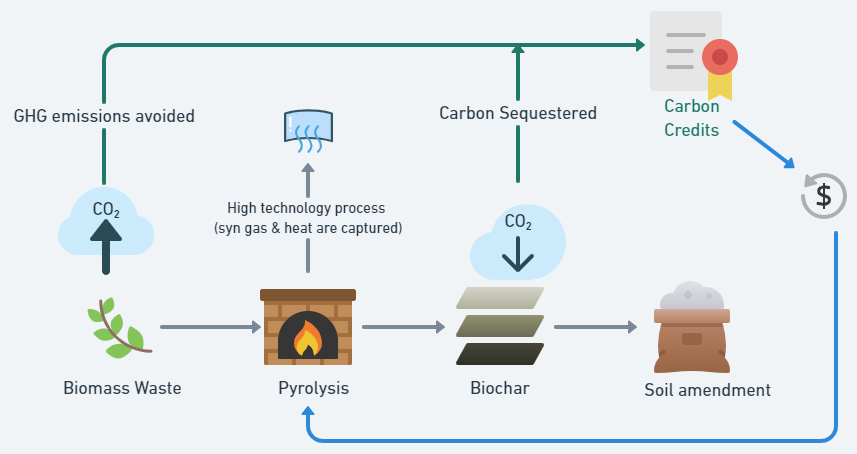
Biochar production involves converting carbon from biomass into stable carbon that can be captured in the soil. Through high-temperature processes conducted in oxygen-limited environments, biomass such as agricultural and forestry residues or manure is transformed into a solid, porous, and carbon-rich material. The stability of biochar can range from several decades to several centuries, enabling long-term carbon sequestration.
When biochar is added to soil, it acts as a carbon sink, sequestering carbon dioxide and preventing its release into the atmosphere. The porous physical structure of biochar enhances its ability to retain water and nutrients, thereby improving soil fertility. Additionally, biochar helps restore degraded soil, contributing to climate change mitigation and the overall sustainability of rural communities.
Biochar Certification and Validation
Biochar projects can generate tradable carbon credits, enabling them to contribute to global emissions reductions while also providing financial incentives for their implementation. The certification and validation play a crucial role in ensuring the credibility and effectiveness of carbon sequestration initiatives. Organizations such as Verra, Puro.earth, and Carbon Standard International have developed robust certification methodologies to verify biochar projects and generate carbon credits.
- Verra, a leading certification body, plays a significant role in the validation and certification of biochar projects through its Verified Carbon Standard (VCS). VCS has developed a comprehensive methodology (VM0044) specifically designed for biochar projects, which provides a framework for carbon accounting and eligibility rules. The methodology outlines the guidelines and requirements for measuring and verifying the carbon sequestration potential of biochar, ensuring the accuracy and transparency of the process. It considers factors such as the type of feedstock used, the pyrolysis process employed, and the stability and permanence of the carbon stored in the biochar. Verra's rigorous certification process and the utilization of the VCS methodology ensure the credibility and effectiveness of biochar projects in combating climate change.
- Puro.earth certification is a reputable and specialized certification program specifically focused on carbon removal solutions, including biochar. Puro.earth has developed rigorous standards and methodologies to validate the carbon removal potential of biochar projects. Their certification process involves thorough assessment and verification of project documentation, carbon accounting methodologies, and project monitoring protocols.
- The European Biochar Certificate (EBC) offers a specialized certification program known as C-sink certification, focusing on the carbon sequestration potential of biochar. The C-sink certification provided by EBC ensures that biochar produced and used in accordance with their standards effectively sequesters carbon from the atmosphere. The European Biochar Certificate (EBC) also offers an innovative program known as the Artisanal C-sink Program, specifically designed for small-scale biochar producers. This program recognizes the unique challenges and contributions of artisanal biochar producers in the context of carbon sequestration. The Artisanal C-sink Program aims to support and promote small-scale biochar projects (usually involving low technology pyrolysis process) that prioritize sustainable production practices and carbon sequestration potential.
Cost of Certification
The cost of certification for biochar projects can vary depending on several factors, including the certification body, the scale of the project, the complexity of the methodology, and the level of support or services provided. It is important to note that certification costs may include various components such as application fees, project assessment and verification costs, monitoring and reporting expenses, and ongoing compliance requirements. The cumulative cost for certification and trading of certified carbon credits usually ranges between 25 to 30% of the revenue generated from the sale of carbon credits.
The Need for Carbon Credits
The manufacture of biochar involves significant expenses, primarily due to the need for specialized pyrolysis equipment and the costs associated with storing and transporting the pyrolysis gas. The production process requires high-end machinery capable of achieving specific temperatures and maintaining an oxygen-free environment. These capital-intensive requirements present challenges for producers with limited initial capital, making it difficult for them to enter the biochar industry.
To overcome the cost barriers, it is crucial to explore strategies that can make biochar production more financially viable. One viable approach is to pursue project certification and generate carbon credits for such initiatives. By obtaining certification and unlocking carbon credits, biochar projects can access financial incentives and generate additional revenue streams. This can help offset the costs associated with biochar production, making it a more financially viable and attractive option for producers.
Financing of biochar projects
Biochar project developers can explore financing options through offtake agreements and advance market commitments for the purchase of carbon credits. Offtake agreements and advance market commitments involve establishing contracts with buyers who commit to purchasing a predetermined quantity of carbon credits generated by the biochar project at a predetermined price. These agreements provide stability and revenue certainty, making it easier for project developers to secure financing from banks and investors. By leveraging offtake agreements and advance market commitments, biochar project developers can attract investors and lenders who recognize the value of carbon credits as an emerging asset class, thus enabling the growth and expansion of biochar projects.
The Way Forward
Growing demand for environmentally friendly and organic food products is expected to boost the demand for biochar worldwide. This, coupled with the increased focus on biochar's capabilities to sequester carbon dioxide for longer periods, would lead to the growth of the biochar industry in the near future. However, it is essential for biochar project developers to ensure that they use advanced pyrolysis technology and capture the syn gas and heat generated from the plant so as to to make it more efficient and environment friendly.
